Features
Stories, mysteries and questions answered by museum experts.
43 results

Feature
Animals in Jars
If you’ve ever been lucky enough to go behind the scenes at a natural history museum you might have seen something a little…
KS2
Feature
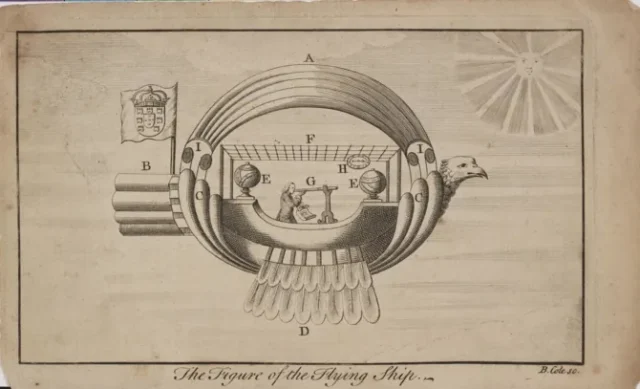
Extraordinary inventions
Each invention begins with an inventor… and all inventors have to start somewhere, with something. It might be just an idea…

Feature
Holding hands through history
Our museums hold some of the most beautiful jewellery collections in the world. Nowadays it is common for people to give…

Feature
How does stuff end up in a museum?
As you walk around a museum have you ever taken a second to wonder how did all this stuff end up here? Collectors collecting…

Feature
Writing Children’s Books
Seven Stories in Newcastle-upon-Tyne is a huge archive and museum all about children’s books. They have a library with over…
KS2

Feature
Lucky or Unlucky? The Pigs that Survived at Sea
Our friends at the Imperial War Museum have some really interesting objects in their collection and one of them really got…

Feature
What did our ancestors look like?
Nowadays there are pictures of us everywhere: on our walls, on our phones, and all over the internet. People in the future…

Feature
Museums with great Greek artefacts
Ancient Greece was an incredible civilisation. It began around 3000BC and ended around AD140 when the Romans conquered…
KS2

Feature
African Art: The Benin Bronzes
The British Museum, and some other museums in the UK, have some beautiful works of art with a very bloody history in their…
KS2

Feature
What is Archaeology?
Learning about the past by looking at the things they left behind is called archaeology (pronounced ‘r-KEY-oh-low-GEE’).…

Feature
See inside Big Ben
Big Ben is what people think of as the Clock Tower next to the Houses of Parliament in London. Most people think that Big…

Feature
Where to see the Vikings…
In history, 700-1100AD in Europe is known as the Viking Age. The term ‘Viking’ comes from an old Norse word meaning ‘pirate…
KS2

Feature
Curator’s Choice: ‘Rinkomania’
Before joining Show Me and our grown up site Culture 24, our Editorial Assistant Sarah Jackson used to work at Brighton…

Feature
Was the city of Troy a real place?
Have you ever heard of the story of the Trojan War? It was one of the most important events in Ancient Greek mythology. But…

Feature
Curator’s Choice: Neanderthal hand axe
Back in the Stone Age, Neanderthals roamed much of the world. They were a close relative of modern humans, or homo sapiens.…
KS2

Feature
What is a museum?
So, what is a museum? At first you might think the answer is simple - a museum is a building full of old stuff. However…

Feature
Curator’s Choice: Apollo 10 Command Module
Have you ever heard of Project Apollo? It was a program carried out by NASA to get humans into space - specifically, the…

Feature
Putting things in order
Imagine for a moment that you are in charge of a museum or art gallery. You are the person responsible for organising all of…

Feature
Is this a ghost? You decide…
When a photographer visited Dr. Jenner's House and Garden in Gloucestershire he ended up with some rather spooky pics. Chris…

Feature
Almost Extinct: a project to save unique animals
We're really interested in this project that aims to help save some of the planet's most extraordinary threatened animals to…
KS2

Feature
What is a curator?
Literally speaking, a curator is someone who cares for or looks after something. It comes from the Latin verb curo which…

Feature
First World War Submarine Wrecks
The wrecks of two submarines discovered near the Orkney Islands could be German U-Boats from the First World War. 'U-boat'…
KS3

Feature
Did the Romans introduce rabbits to Britain?
When the bones of a Roman rabbit were found in Norfolk, newspapers reported that this might be the earliest bunny ever found…
KS2
Feature
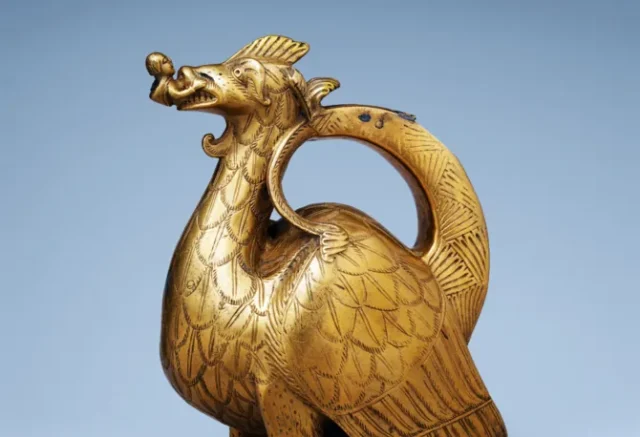
Beowulf’s Dragon
One of the most precious things we have left from Anglo-Saxon times is a long adventure poem, called an 'epic' poem, about a…
Feature
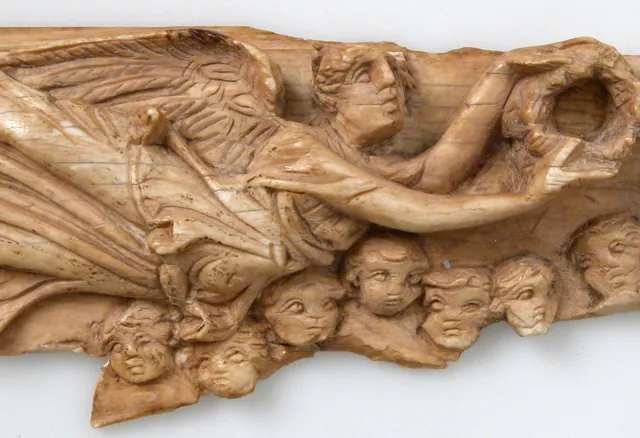
Did the Romans play football?
It turns out that the Romans did play football, in their own way of course. We don't know the exact Roman rules for their…
KS2

Feature
Tudor rose
The Tudor rose was the emblem for the Tudor family. It was like a logo they used to show that they were a part of this…
Feature
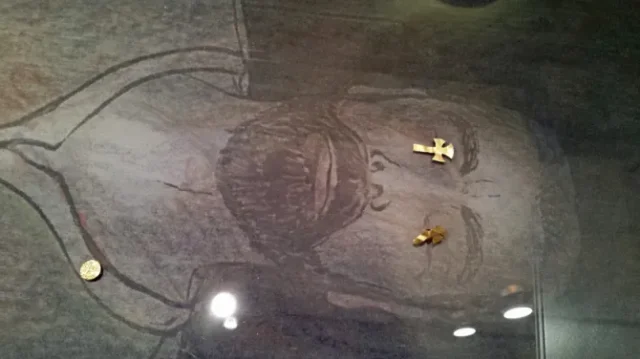
Anglo-Saxon King’s Burial Site Found
Archaeologists found the grave of an Anglo-Saxon king at Southend in Essex in 2004. The king's body is long gone but an…
KS2

Feature
Rock on: all about road salt
Can you tell what the photo below is? It may not look like it, but it's salt - or rather rock salt! Did you know that it…

Feature
How big were dinosaur eggs?
We all know that dinosaurs were some of the biggest animals to walk the earth. Some of the biggest of these were sauropods…
KS2

Feature
Curator’s Choice: Dinosaur dung
One of the journalists at the museum news site Culture24 has interviewed Mary Goodwin, a curator from the Philpott Museum in…
KS2

Feature
Giant pink rabbit found on Italian hillside
A group of artists called Gelitin have knitted a huge pink rabbit and left it lying on a hill in Italy. The bunny is SO BIG…

Feature
Did Vikings have horned helmets?
The idea that Vikings had horns, or sometimes feathers, on their helmets like on the statue above, is one of the most…
KS2

Feature
Bonfire Night: The Real Story Of Guy Fawkes
Do you know what the men in the picture below are doing? If you look closely you can see they're carrying lanterns. They are…
KS3

Feature
Why did Tudors kill so much wildlife?
Being around in Tudor times wasn't much fun if you were the wife of King Henry VIII - 2 of his 6 wives were executed. Being…
KS3

Feature
Why people wear poppies in November
You might have noticed that in November each year many people wear bright red paper poppies. What are the poppies for? And…
KS3

Feature
Did Henry VIII play football?
We might think King Henry VIII liked nothing more feasting and getting married, but evidence suggests that he also enjoyed…
KS3

Feature
Meet the young Henry VIII
What do you think of when someone says 'Henry VIII'? Do you think of a big man with a beard and a bad temper - the Tudor…
KS3

Feature
What happens when the archaeologists go home?
Show Me was lucky enough to spend the day with Time Team. You can watch past programmes online here. Time Team have turned…

Feature
Why a vomitorium is not what it sounds like…
If you have been studying the Ancient Romans, you have probably come across the term 'vomitorium' which comes from a Latin…
KS2

Feature
Are these bones from a battle with Boudicca?
Archaeologists working at a site in Colchester, an Essex town with a rich Roman history, have found some Roman remains. They…
KS2

Feature
Cow Farts: Global warmers or a load of hot air?
Scientists and farmers around the world are debating a very serious subject. Cow farts. Yes, really, they're talking about…

Feature
Toilets through the ages
You may use one every day but have you ever considered the history of the toilet? We reveal some strange but interesting…
Feature
The Trans-Atlantic Slave Trade
If you visit Liverpool today you can go and visit the International Slavery Museum. This museum is there to teach us all…
KS3
Nothing matches these filters. Try “Everything” or another key stage.