Science
Experiments to try, inventions that changed the world, and how things work.
89 results

Make and do
Tune Booster
We all know that the speakers on smartphones arent very good and portable speakers can be really expensive. Well the Science…
KS2

Make and do
How to make Ear gongs
Our friends at the Science Museum have made up this activity that helps us to understand how sound travels. Using just a few…
KS1KS2

Object from National Maritime Museum - Royal Museums Greenwich
‘Portrait of a Large Dog’ (Dingo)
This painting of a Dingo, a wild dog from Australia, was painted by George Stubbs. The only thing is, Stubbs had never seen…

Object from National Maritime Museum - Royal Museums Greenwich
Barnacle taken from hull of an Indiaman
Although this little Barnacle doesn't look impressive it tells a very important story in British and World history. Can you…

Website from Natural History Museum
Come face-to-face with Dippy the dinosaur – explore his skull in 3D
As Dippy the Diplodocus sets off on his first UK tour, the Natural History Museum has taken the opportunity to do a 3D scan…

Video from The Royal Institute
Homemade lava lamp
Make a home-made lava lamp. Experiment with objects of different shapes and sizes. See what makes a difference to whether…
KS2

Video from Royal Institute
The Science of Firebreathing
WARNING: DO NOT TRY THIS AT HOME Dr Tim Cockerill explores the science behind the most dangerous stunt in the firebreather's…
KS3

Make and do
Bubble Fun
Everybody loves bubbles and we all know the bigger the better! You can make massive bubbles at home with the Science…

Make and do
Bottle Top Shapes
Geometry might sound like a daunting subject but this creative activity from the Science Museum makes it a little more…
KS2

Website from Natural History Museum
Dippy the Dino-Star
After spending nearly 40 years in the Natural History Museum's grand entrance hall, Dippy the Diplodocus Carnegii is going…

Feature
Animals in Jars
If you’ve ever been lucky enough to go behind the scenes at a natural history museum you might have seen something a little…
KS2

Video from Natural History Museum
A Diplodocus Deconstructed
If, like us, you've been following Dippy the Diplodocus on his journey out of the Natural History Museum, then you'll love…

Website from Museum of London
Frost Fairs: London’s Frozen Thames
Did you know that until 1814 the river Thames in London would occasionally freeze solid? Our friends at the Museum of London…

Object from Science Museum
Electroconvulsive therapy machine
This is a very strange looking machine, it looks like part of an aeroplane or boat, certainly not something that would be…

Object from Science Museum
A genetically engineered pig heart in a glass jar
This is a very strange object indeed, and perhaps not what you expect to see in a museum (although we know lots of things…

Object from Science Museum
The Flying Ship
Have you ever wished that you could fly? Humans have been fascinated with air travel for thousands of years, the earliest…

Object from Newcastle University Special Collections and Archives
Old Aunt Elspa’s ABC
This charming little alphabet book is a type of chapbook, a cheap form of literature that was common from the 17th to 19th…

Object from Science Museum
Bottle of blood purifying mixture
When you look at this bottle of Blood Purifying Mixture it is hard to believe that this was used as medicine, it looks more…

Object from Science Museum
Sir Hiram Maxim’s ‘Pipe of Peace’
Sir Hiram Maxim was an American inventor with a wild imagination. He is most famous for his invention of the Maxim machine…

Object from Science Museum
SOKOL Zvezda space suit worn by Helen Sharman
Helen Sharman was the first British person to go into space, that is pretty impressive! She was chosen to be part of the…

Video from The Manchester Museum
How to make a volcano
This film shows how you can make volcanic eruptions at home. David Gelsthorpe and Hannah Chalk from The Manchester Museum…
KS2

Topic guide
Topic Guide: Chemistry
In this section, we’re covering chemistry topics including: matter and elements, the periodic table of elements…
KS3

Video from The Natural History Museum
The World’s Heaviest Spider
Are you scared of spiders? Then look away now! This film from the Natural History Museum is looking for the world's heaviest…
KS2

Video from The Natural History Museum
Fishing for new life
Strange life forms have evolved in the peat swamps of Southeast Asia, harsh habitats once thought to be devoid of life.…
KS3

Video from British Pathé
The Wright Brothers Flight (1900-1920)
On December 17 1903, news came through that two brothers from America had flown a curious air machine for more than a…
KS2KS3

Video from The Royal Institute
Giant bubbles
Make a home-made bubble mixture and wands. Use them to look more closely at the characteristics and behaviour of soap…
KS2

Video from The Royal Institute
Musical coat hangers
Make a surprising sound device from a coat hanger. Experiment to see what sort of things affect the sounds you hear. Learn…
KS2

Video from The Royal Institute
Spaghetti towers
Make a tower from spaghetti and marshmallows. Experiment with the construction of your tower to find out which shapes are…

Video from Wellcome Collection
Should we eat insects?
Professor Marcel Dicke explains why we should all be eating more insects, while food experts Nordic Food Lab prepare an…

Topic guide
Topic Guide: Physics
Physics topics covered here include: science museums, energy, forces and motion, electricity and magnets, properties and…
KS3

Video from The Royal Institute
Rubber band cannons
Make a 'cannon' using elastic bands, a soft drink bottle and a crisps tin and explore how things fired from it move through…
KS2

Video from Royal Museums Greenwich
Alien Worlds and the Doppler Effect
Royal Observatory Greenwich astronomer Radmila demonstrates how the Doppler Effect can be applied to finding planets…
KS3

Game from Science Museum
Launchball
A tricky but incredibly addictive game from the Science Museum. Can you work out how to guide the ball to the hole?

Topic guide
Topic Guide: Biology
In this biology topic guide we will be looking at: humans and other animals, plants, ecosystems, the environment, genetics…
KS3

Video from The Manchester Museum
Where does chocolate come from?
Andrew Gray is a curator at the Manchester Museum and he has travelled to Costa Rica to show you where chocolate comes from.

Video from British Pathé
A Phone in a Car?
A short film from 1959 showing a car with a built in telephone.

Video from British Pathé
Man walks on the Moon
On July 21 1969, Neil Armstrong became the first human to set foot on the moon. As he put his left foot down first Armstrong…
KS2KS3

Video from British Pathé
A Flying Platform
US Navy demonstrates its Flying Platform in 1955, a 'flying skateboard' or 'hover board' vehicle that uses a direct lift…

Video from The Royal Institute
Balancing sculptures
Make a balancing toy. Experiment with the design of your toy to find out what affects its balance. Learn about the centre of…

Video from The Royal Institute
Static Magic
Make objects move without touching them by charging them with static electricity. Experiment with different objects to see…
KS2

Video from The Royal Institute
Balloon car racers
Make cars which are propelled by balloon power. Experiment with designs and see what factors affect how fast or how far your…
KS2

Video from Royal Museums Greenwich
How do we know how old the sun is?
Royal Observatory Greenwich astronomer Brendan explains how we determine the age of our Solar System from space rocks and…
KS2

Video from British Pathé
Real Life Flea Circus
Filmed in Paris in 1949, this genuine flea circus sees some very big fleas pulling various miniature vehicles across a…
KS3

Video from British Pathé
The Dynasphere!
Is the car really the best form of motorised transportation? This film shows us the Dynasphere, a remarkable invention in…

Make and do
Knotty Gardening
In the sixteenth century knot gardens became very fashionable at grand country houses. They were square gardens planted out…
KS2

Video from The Natural History Museum
One Million Years in the making – the models
Watch the Dutch artists, the Kennis brothers, as they produce lifelike models of a Neanderthal and an early Homo sapiens.

Video from British Pathé
A 1920s Music Player
Check out this 1920s predecessor to the Walkman and iPod. Fantastic film showing the forerunner of the Sony Walkman - tuning…

Video from British Pathé
The World’s Tallest Man
Born in 1918, Robert is still to this day known as the tallest person in medical history. When the Pathe cameras went to…

Video from Science Museum
Collider: Step inside the world’s greatest experiment
The Science Museum is recreating a lab from CERN, the world's most famous particle physics laboratory. This video shows you…
KS3

Top ten
Top ten British Pathe films
British Pathé is one of the oldest media companies in the world, with a history stretching back to the 1890s. In that time…
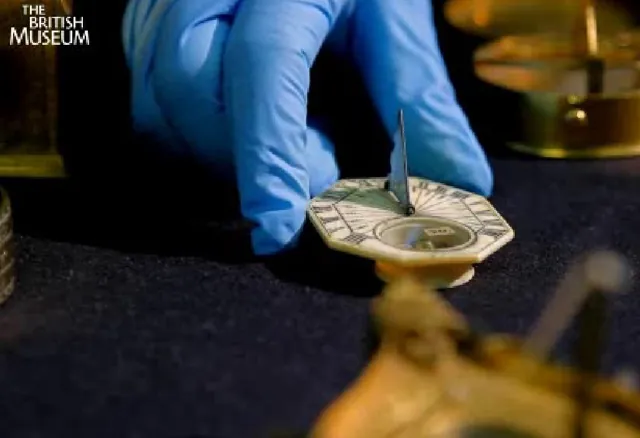
Video from The British Museum
A Brief History of Time
From computers to phones, watches and clocks, everywhere you look there's something telling you the time. This video from…
KS2

Video from The Horniman Museum and Gardens
Extreme Curator: Low Oxygen
Natural history curator Paolo Viscardi ventures to London's Altitude centre to take a breath at 6,000 metres for this…
KS2KS3

Feature
Curator’s Choice: Apollo 10 Command Module
Have you ever heard of Project Apollo? It was a program carried out by NASA to get humans into space - specifically, the…

Top ten
Top ten mammoth facts
We are all big mammoth fans here at Show Me HQ. Here are some of the fantastic facts we've learnt about them on our travels…
KS2

Video from The Royal Institute
Homemade parachutes
Make parachutes out of household materials. Experiment to see what things affect how quickly a parachute falls. Learn why…
KS2

Video from The Horniman Museum and Gardens
Extreme Curator: Dark
Natural history curator Paolo Viscardi tries to navigate the familiar Natural History Gallery after being plunged into…
KS2KS3

Top ten
Top ten animals from museums, galleries and archives
We all love cute kittens, playful puppies and other amazing animals - who wouldn’t? Luckily for us, museums, art galleries…

Video from British Pathé
Flying Saucer Mystery!
This footage from 1952 shows what could be evidence for UFOs... what do you think?

Video from The Horniman Museum and Gardens
Extreme Curator: Hot
Natural history curator Paolo Viscardi attempts a Hot Bikram Yoga class in order to experience what happens when we get over…
KS2KS3

Video from The Horniman Museum and Gardens
Extreme Curator: Cold
Natural history curator Paolo Viscardi braves London's Icebar for the first of his Extreme Curator challenges, and…
KS2KS3

Topic guide
Topic Guide: Evolution
In this topic guide Show Me will explore what museums have to say about evolution: What is evolution? The Natural History…
KS2

Feature
Almost Extinct: a project to save unique animals
We're really interested in this project that aims to help save some of the planet's most extraordinary threatened animals to…
KS2

Make and do
Pooter Plans
A pooter is a device scientists use to pick up small objects, like insects, without hurting them. Imagine a miniature vacuum…
KS2

Feature
Did the Romans introduce rabbits to Britain?
When the bones of a Roman rabbit were found in Norfolk, newspapers reported that this might be the earliest bunny ever found…
KS2
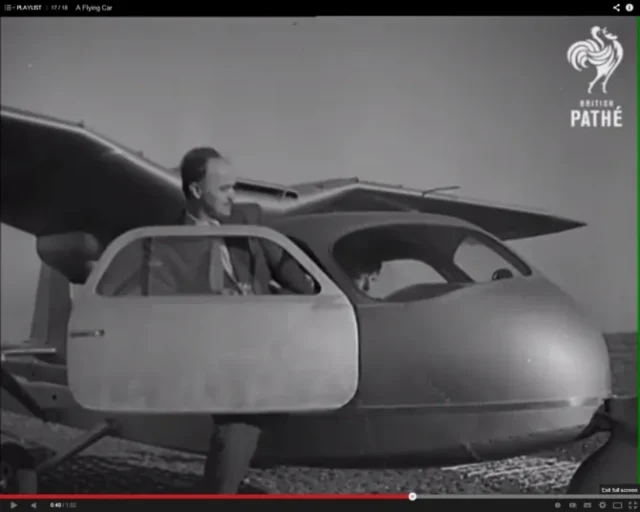
Video from British Pathé
A Flying Car
When you think about the future you might imagine flying cars, well we at Show Me have been searching high and low and we've…

Video from Wellcome Collection
Secrets of the Flea Circus
Dr. Tim Cockerill is an entomologist by day and a circus performer by night. It seems only natural that he would become…
KS3

Video from The Royal Institute
Singing wine glasses
Make a musical instrument using wine glasses and water. Experiment with different amounts of water in the glasses to see how…
KS2

Video from Royal Institute
This film sucks!
As an entomologist, Tim is used to getting up close and personal with insects and here he lets a hungry leech feed on his…
KS3

Feature
Rock on: all about road salt
Can you tell what the photo below is? It may not look like it, but it's salt - or rather rock salt! Did you know that it…

Video from The Grant Museum
The Micrarium
The Micrarium at the UCL Grant Museum of Zoology showcases some of the tiniest and most intriguing members of the animal…
KS2KS3

Top ten
Top ten places to see dinosaurs
Who doesn’t love a dinosaur? The team here at Show Me HQ certainly does, so we’ve put together this handy guide to some of…
KS2

Video from Leicester Museums
The Rutland Dinosaur
John Martin, Former Keeper of Geology and Curator at New Walk Museum and Art Gallery, Leicester talks about the discovery…

Feature
How big were dinosaur eggs?
We all know that dinosaurs were some of the biggest animals to walk the earth. Some of the biggest of these were sauropods…
KS2

Feature
Why did Tudors kill so much wildlife?
Being around in Tudor times wasn't much fun if you were the wife of King Henry VIII - 2 of his 6 wives were executed. Being…
KS3

Video from English Heritage
How to diagnose illness in the 15th Century
English Heritage show us just how far medicine has come. This video shows you how a doctor in the 15th Century would go…

Top ten
Top ten amazing dinosaur facts
Dinosaurs are some of our favourite things to see in museums. There's far more to them than just the bones you see on…
KS2

Top ten
Top ten dead things in museums
Many museums are full of dead things and we love them for it. On our travels around museums, the Show Me team has seen our…

Video from ZSL- Zoological Society of London
The bear who inspired Winnie-the-Pooh
Ever wondered how Winnie-the-Pooh got his name? This is the story of Winnie the bear, who arrived at ZSL London Zoo a…

Topic guide
Thomas Edison: Victorian Inventor
Have you heard of the American scientist, inventor and businessman Thomas Edison? He lived from 1847 to1931. The Science…
KS2KS3

Video from The Natural History Museum
Baryonyx: The Discovery of an incredible Dinosaur
The story of one of the most exciting dinosaur discoveries ever made in Britain began in 1983 when a huge claw bone was…

Object from Manx National Heritage
Giant deer skeleton
This massive skeleton is quite something! Just imagine what the Giant Deer stag would have looked like when it was alive.…

Feature
Cow Farts: Global warmers or a load of hot air?
Scientists and farmers around the world are debating a very serious subject. Cow farts. Yes, really, they're talking about…
Object from Wellcome Collection
Table of Unusual Creatures
Nature has produced some very unusual creatures. This illustration from the Wellcome Collection shows you all sorts of weird…
Object from Wellcome Collection
Model eye glass
This is one of the more unusual objects from the Wellcome Collection. It is a model eye with a glass lens mounted on to…
Object from Rijksmuseum
Nautilius cup
This amazing cup looks like an ostrich. The bird's body is made from a nautilus shell. A nautilus is a type of mollusc (like…
Object from Wellcome Collection
Revolving hats
Nowadays, we have smartphones in our pockets that can do almost anything, but what about the days before such technology…
Object from Wellcome Collection
Letter from Mary Anning
Mary Anning is a famous dinosaur discoverer who ‘sold sea shells by the sea shore’. She wrote this letter describing her…
Object from Manx National Heritage
Loghtan sheep (Ovis aries)
Have you ever seen a sheep with four horns before? The loghtan (or loaghtan as it's sometimes spelled) was an ancient breed…
Object from Wellcome Collection
Extracting a tooth
No one likes going to the dentist - but it's a lot better today than it was in the 1600s! Just have a look at this painting…
Nothing matches these filters. Try “Everything” or another key stage.