Biology
Collections, videos, games and stories tagged “Biology”.
32 results

Object from National Maritime Museum - Royal Museums Greenwich
‘The Kongouro from New Holland’ (Kangaroo)
Captain James Cook, 1728-1779, was an explorer, navigator and a Captain in the Royal Navy. He was the first known European…

Object from National Maritime Museum - Royal Museums Greenwich
‘Portrait of a Large Dog’ (Dingo)
This painting of a Dingo, a wild dog from Australia, was painted by George Stubbs. The only thing is, Stubbs had never seen…
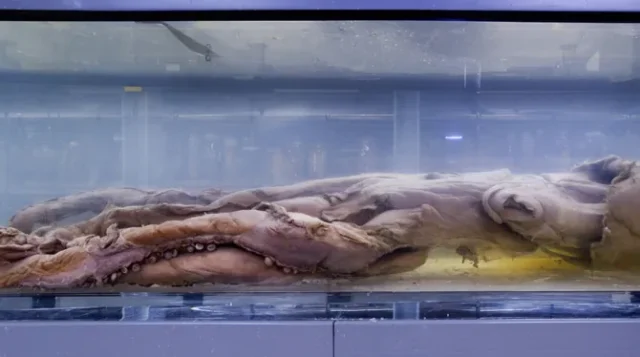
Video from Natural History Museum, London
Giant Squid: From the Deep Sea to Display
Jon Ablett, Curator at the Natural History Museum, talks about the museum's giant squid specimen. This squid was…

Object from Horniman Museum and Gardens
Domestic Dog (Head)
The Pekinese is the dog of Chinese Emperors. They were bred with bowed legs making them unable to stray far from their…

Object from Science Museum
A genetically engineered pig heart in a glass jar
This is a very strange object indeed, and perhaps not what you expect to see in a museum (although we know lots of things…

Video from The Natural History Museum
The World’s Heaviest Spider
Are you scared of spiders? Then look away now! This film from the Natural History Museum is looking for the world's heaviest…
KS2

Video from The Natural History Museum
Fishing for new life
Strange life forms have evolved in the peat swamps of Southeast Asia, harsh habitats once thought to be devoid of life.…
KS3

Video from Wellcome Collection
Should we eat insects?
Professor Marcel Dicke explains why we should all be eating more insects, while food experts Nordic Food Lab prepare an…

Topic guide
Topic Guide: Biology
In this biology topic guide we will be looking at: humans and other animals, plants, ecosystems, the environment, genetics…
KS3

Video from The Manchester Museum
Where does chocolate come from?
Andrew Gray is a curator at the Manchester Museum and he has travelled to Costa Rica to show you where chocolate comes from.
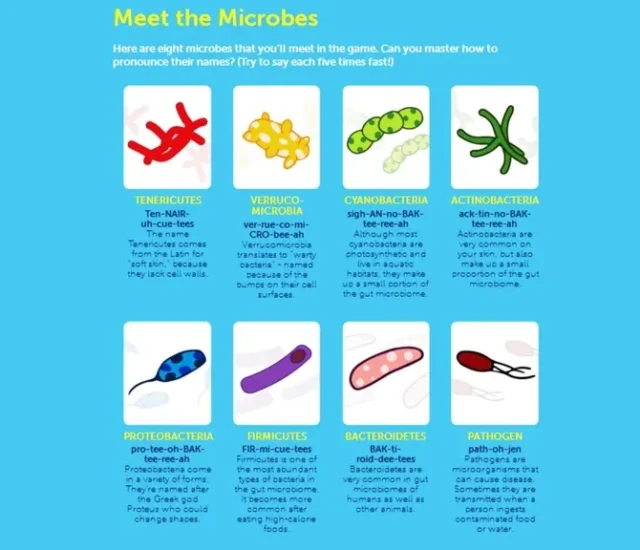
Make and do
Learn about microbes with the Gutsy card game
Microbes or micro-organisms are tiny living things that you can only see using a microscope. They are all around us and…

Make and do
Knotty Gardening
In the sixteenth century knot gardens became very fashionable at grand country houses. They were square gardens planted out…
KS2

Video from British Pathé
The World’s Tallest Man
Born in 1918, Robert is still to this day known as the tallest person in medical history. When the Pathe cameras went to…

Video from The Horniman Museum and Gardens
Extreme Curator: Low Oxygen
Natural history curator Paolo Viscardi ventures to London's Altitude centre to take a breath at 6,000 metres for this…
KS2KS3

Top ten
Top ten mammoth facts
We are all big mammoth fans here at Show Me HQ. Here are some of the fantastic facts we've learnt about them on our travels…
KS2

Video from The Horniman Museum and Gardens
Extreme Curator: Dark
Natural history curator Paolo Viscardi tries to navigate the familiar Natural History Gallery after being plunged into…
KS2KS3

Top ten
Top ten animals from museums, galleries and archives
We all love cute kittens, playful puppies and other amazing animals - who wouldn’t? Luckily for us, museums, art galleries…

Video from The Horniman Museum and Gardens
Extreme Curator: Hot
Natural history curator Paolo Viscardi attempts a Hot Bikram Yoga class in order to experience what happens when we get over…
KS2KS3

Video from The Horniman Museum and Gardens
Extreme Curator: Cold
Natural history curator Paolo Viscardi braves London's Icebar for the first of his Extreme Curator challenges, and…
KS2KS3

Topic guide
Topic Guide: Evolution
In this topic guide Show Me will explore what museums have to say about evolution: What is evolution? The Natural History…
KS2

Feature
Almost Extinct: a project to save unique animals
We're really interested in this project that aims to help save some of the planet's most extraordinary threatened animals to…
KS2

Make and do
Pooter Plans
A pooter is a device scientists use to pick up small objects, like insects, without hurting them. Imagine a miniature vacuum…
KS2

Feature
Did the Romans introduce rabbits to Britain?
When the bones of a Roman rabbit were found in Norfolk, newspapers reported that this might be the earliest bunny ever found…
KS2

Video from Wellcome Collection
Secrets of the Flea Circus
Dr. Tim Cockerill is an entomologist by day and a circus performer by night. It seems only natural that he would become…
KS3

Video from Royal Institute
This film sucks!
As an entomologist, Tim is used to getting up close and personal with insects and here he lets a hungry leech feed on his…
KS3

Video from The Grant Museum
The Micrarium
The Micrarium at the UCL Grant Museum of Zoology showcases some of the tiniest and most intriguing members of the animal…
KS2KS3

Top ten
Top ten dead things in museums
Many museums are full of dead things and we love them for it. On our travels around museums, the Show Me team has seen our…

Video from The Natural History Museum
Baryonyx: The Discovery of an incredible Dinosaur
The story of one of the most exciting dinosaur discoveries ever made in Britain began in 1983 when a huge claw bone was…

Object from Manx National Heritage
Giant deer skeleton
This massive skeleton is quite something! Just imagine what the Giant Deer stag would have looked like when it was alive.…
Object from Horniman Museum and Gardens
Flying Fox
Fruit bats, or ‘flying foxes’, with their small ears and big eyes are the largest bat species in the world and can have a…
Object from Wellcome Collection
Table of Unusual Creatures
Nature has produced some very unusual creatures. This illustration from the Wellcome Collection shows you all sorts of weird…
Object from Manx National Heritage
Loghtan sheep (Ovis aries)
Have you ever seen a sheep with four horns before? The loghtan (or loaghtan as it's sometimes spelled) was an ancient breed…
Nothing matches these filters. Try “Everything” or another key stage.