Key Stage 2 (ages 7–11)
Objects, videos, games and guides that teachers have tagged for Key Stage 2 (ages 7–11). Open any page for its teacher notes.
80 results
Video from Royal Museums Greenwich
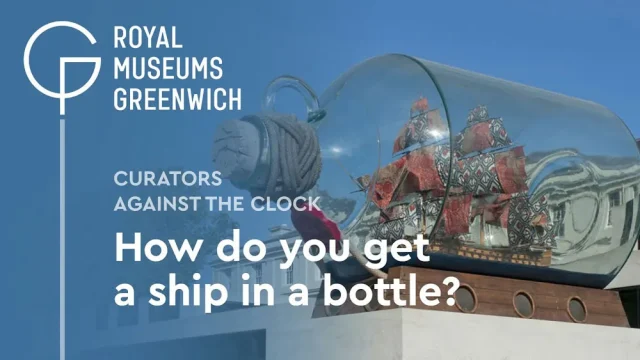
How do you get a ship in a bottle?
Have you ever seen a ship in a bottle? Sailors originally made them to pass the time on long voyages at sea. They became…
KS2KS3

Make and do
Tune Booster
We all know that the speakers on smartphones arent very good and portable speakers can be really expensive. Well the Science…
KS2

Make and do
How to make Ear gongs
Our friends at the Science Museum have made up this activity that helps us to understand how sound travels. Using just a few…
KS1KS2

Video from The Royal Institute
Homemade lava lamp
Make a home-made lava lamp. Experiment with objects of different shapes and sizes. See what makes a difference to whether…
KS2
For teachers
For Teachers: Science Museum Learning Resources
Teachers can use this website from the Science Museum to search for resources on a huge selection of scientific topics from…
KS1KS2KS3

For teachers
For Teachers: Teaching History with 100 Objects
This website created by the British Museum is a fantastic resource for teachers. Teaching History with 100 Objects has…
KS1KS2KS3

Make and do
Bottle Top Shapes
Geometry might sound like a daunting subject but this creative activity from the Science Museum makes it a little more…
KS2

Feature
Animals in Jars
If you’ve ever been lucky enough to go behind the scenes at a natural history museum you might have seen something a little…
KS2

Feature
Writing Children’s Books
Seven Stories in Newcastle-upon-Tyne is a huge archive and museum all about children’s books. They have a library with over…
KS2

Website from Tate
Tate Kids
Get to know the Tate collections, learn about the artists, meet the people who work there and even create and share your own…
KS2KS3

Video from The Manchester Museum
How to make a volcano
This film shows how you can make volcanic eruptions at home. David Gelsthorpe and Hannah Chalk from The Manchester Museum…
KS2

Feature
Museums with great Greek artefacts
Ancient Greece was an incredible civilisation. It began around 3000BC and ended around AD140 when the Romans conquered…
KS2

Topic guide
Topic Guide: The Stone Age
'Stone Age' is a term used to describe the long period of time when early humans used tools made out of stone. Stone Age…
KS2

Feature
African Art: The Benin Bronzes
The British Museum, and some other museums in the UK, have some beautiful works of art with a very bloody history in their…
KS2

Video from The Natural History Museum
The World’s Heaviest Spider
Are you scared of spiders? Then look away now! This film from the Natural History Museum is looking for the world's heaviest…
KS2

Video from The British Museum
A Brief History of Writing
Have you ever wondered how writing came about? Like most things, it had to be invented. This video from The British Museum…
KS2

Top ten
Top ten places to see Ancient Egyptian stuff
The Ancient Egyptians have fascinated us Brits since the first mummy arrived at the British Museum in 1756. Since then…
KS2

Make and do
How to make an Easter card
It's no good buying a card, you know... home-made cards are always more popular. You will need Thin coloured card - two or…
KS2

Video from British Pathé
The Wright Brothers Flight (1900-1920)
On December 17 1903, news came through that two brothers from America had flown a curious air machine for more than a…
KS2KS3

Video from The Royal Institute
Giant bubbles
Make a home-made bubble mixture and wands. Use them to look more closely at the characteristics and behaviour of soap…
KS2

Video from The Royal Institute
Musical coat hangers
Make a surprising sound device from a coat hanger. Experiment to see what sort of things affect the sounds you hear. Learn…
KS2

Video from The Royal Institute
Rubber band cannons
Make a 'cannon' using elastic bands, a soft drink bottle and a crisps tin and explore how things fired from it move through…
KS2

Video from British Pathé
Man walks on the Moon
On July 21 1969, Neil Armstrong became the first human to set foot on the moon. As he put his left foot down first Armstrong…
KS2KS3

Feature
Where to see the Vikings…
In history, 700-1100AD in Europe is known as the Viking Age. The term ‘Viking’ comes from an old Norse word meaning ‘pirate…
KS2

Video from The Royal Institute
Static Magic
Make objects move without touching them by charging them with static electricity. Experiment with different objects to see…
KS2

Video from The Royal Institute
Balloon car racers
Make cars which are propelled by balloon power. Experiment with designs and see what factors affect how fast or how far your…
KS2

Topic guide
Topic Guide: Ancient Greece
Ancient Greek topics covered here include: Ancient Greek Gods, Athenian Democracy, Ancient Greek Pottery, Ancient Olympics…
KS2

Video from Royal Museums Greenwich
How do we know how old the sun is?
Royal Observatory Greenwich astronomer Brendan explains how we determine the age of our Solar System from space rocks and…
KS2

Make and do
Knotty Gardening
In the sixteenth century knot gardens became very fashionable at grand country houses. They were square gardens planted out…
KS2
Video from The British Museum
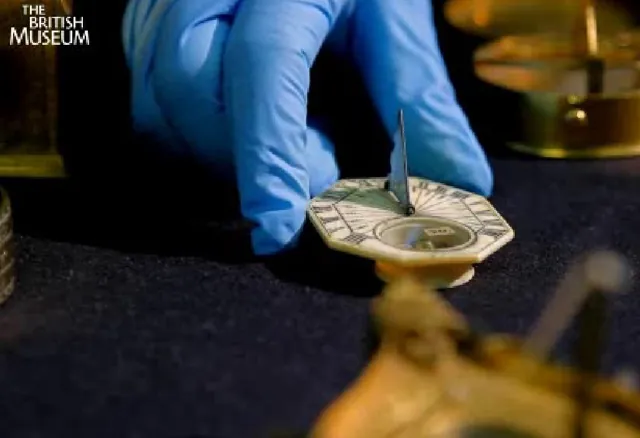
A Brief History of Time
From computers to phones, watches and clocks, everywhere you look there's something telling you the time. This video from…
KS2

Top ten
Top ten Roman places
Julius Caesar attempted to invade Britain in 54BC, but it wasn’t until AD43 when Claudius was Emperor that Britain became…
KS2

Feature
Curator’s Choice: Neanderthal hand axe
Back in the Stone Age, Neanderthals roamed much of the world. They were a close relative of modern humans, or homo sapiens.…
KS2

Video from The Horniman Museum and Gardens
Extreme Curator: Low Oxygen
Natural history curator Paolo Viscardi ventures to London's Altitude centre to take a breath at 6,000 metres for this…
KS2KS3

Top ten
Top ten mammoth facts
We are all big mammoth fans here at Show Me HQ. Here are some of the fantastic facts we've learnt about them on our travels…
KS2

Video from The Royal Institute
Homemade parachutes
Make parachutes out of household materials. Experiment to see what things affect how quickly a parachute falls. Learn why…
KS2

Video from The Horniman Museum and Gardens
Extreme Curator: Dark
Natural history curator Paolo Viscardi tries to navigate the familiar Natural History Gallery after being plunged into…
KS2KS3

Object from V&A Museum of Childhood
Horse and cowboy clockwork toy
This toy shows a cowboy riding a horse. If you wind up the clockwork mechanism, the horse starts to move. You can explore…
KS2

Video from The Horniman Museum and Gardens
Extreme Curator: Hot
Natural history curator Paolo Viscardi attempts a Hot Bikram Yoga class in order to experience what happens when we get over…
KS2KS3

Video from The Horniman Museum and Gardens
Extreme Curator: Cold
Natural history curator Paolo Viscardi braves London's Icebar for the first of his Extreme Curator challenges, and…
KS2KS3

Topic guide
Topic Guide: Evolution
In this topic guide Show Me will explore what museums have to say about evolution: What is evolution? The Natural History…
KS2

Feature
Almost Extinct: a project to save unique animals
We're really interested in this project that aims to help save some of the planet's most extraordinary threatened animals to…
KS2

Video from The British Museum
Repairing an Egyptian Coffin
This video shows conservators at the British Museum preparing an ancient Egyptian coffin for display.
KS2

Video from Manchester Museum
The Spinning Statue
The staff at the Manchester Museum noticed that something was amiss with one of their Egyptian statues - it kept moving!…
KS2

Make and do
Pooter Plans
A pooter is a device scientists use to pick up small objects, like insects, without hurting them. Imagine a miniature vacuum…
KS2

Video from British Pathé
The Discovery of the Temple of Mithras
In 1954, archaeologists discovered a Roman temple buried beneath London's bustling streets. Experts investigated and the…
KS2

Feature
Did the Romans introduce rabbits to Britain?
When the bones of a Roman rabbit were found in Norfolk, newspapers reported that this might be the earliest bunny ever found…
KS2

Topic guide
Topic Guide: Boudicca
Show Me introduced you to Boudicca in our Topic Guide to the Romans, but we felt that she was important enough to merit a…
KS2

Make and do
How to make friendship bracelets
Anglo-Saxons were really good at weaving and embroidery. Many beautiful examples of material, clothes and belts have been…
KS2

Website from The British Museum
Ancient Greece
The British Museum has put together a great website to help you learn all about the Ancient Greeks. You can explore topics…
KS2

Video from British Pathé
Tutankhamen’s Tomb
Famous archaeologist Howard Carter discovered the notorious tomb of Tutankhamen in 1922. This is a short film showing some…
KS2
Feature
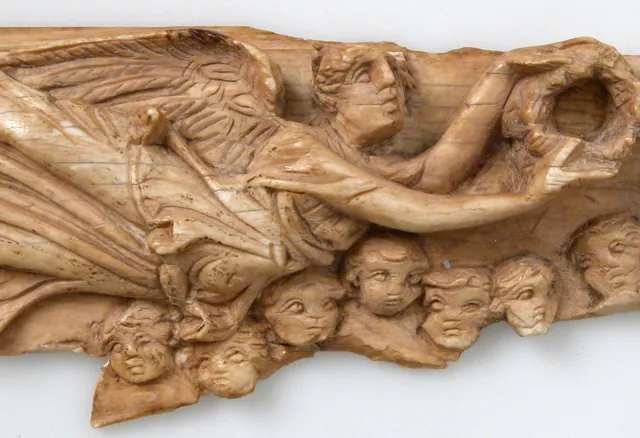
Did the Romans play football?
It turns out that the Romans did play football, in their own way of course. We don't know the exact Roman rules for their…
KS2
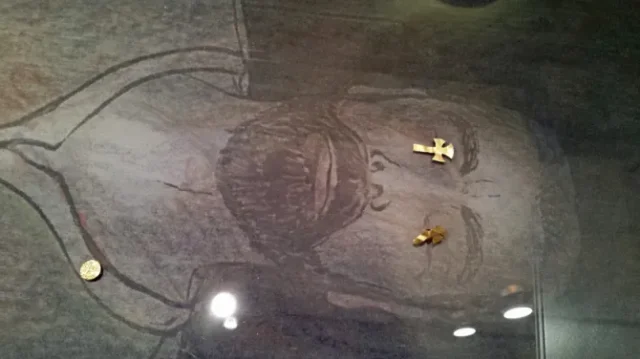
Feature
Anglo-Saxon King’s Burial Site Found
Archaeologists found the grave of an Anglo-Saxon king at Southend in Essex in 2004. The king's body is long gone but an…
KS2

Video from Tate
Tateshots: Lowry
This video from Tate explores the paintings of a 20th century artist named L. S. Lowry.
KS2KS3

Video from The Royal Institute
Singing wine glasses
Make a musical instrument using wine glasses and water. Experiment with different amounts of water in the glasses to see how…
KS2

Video from The Grant Museum
The Micrarium
The Micrarium at the UCL Grant Museum of Zoology showcases some of the tiniest and most intriguing members of the animal…
KS2KS3

Topic guide
Topic Guide: Prehistoric Britain
Take a look out of the window. What do you see? Houses? Fields? Lots of concrete? It hasn't always looked that way. People…
KS2

Top ten
Top ten places to see dinosaurs
Who doesn’t love a dinosaur? The team here at Show Me HQ certainly does, so we’ve put together this handy guide to some of…
KS2

Feature
How big were dinosaur eggs?
We all know that dinosaurs were some of the biggest animals to walk the earth. Some of the biggest of these were sauropods…
KS2

Make and do
Clay Dinosaurs
Clay is perfect for making dinosaur models. How about making a collection of your favourites? Top Tips Not all clay needs to…
KS2

Feature
Curator’s Choice: Dinosaur dung
One of the journalists at the museum news site Culture24 has interviewed Mary Goodwin, a curator from the Philpott Museum in…
KS2

Topic guide
Topic Guide: Romans
Topics we’ve covered in this Roman round up include: Roman Lopndon, Roman gods, Roman army, Roman baths, Roman art, Roman…
KS2

Feature
Did Vikings have horned helmets?
The idea that Vikings had horns, or sometimes feathers, on their helmets like on the statue above, is one of the most…
KS2

Make and do
How to make a Roman shield
Here's a quick and easy Roman soldier's shield in 8 steps - perfect for your school project. You will need Card - a big box…
KS2

Website from The British Museum
Ancient Egypt
If you're studying the Ancient Egyptians, then this site from the British Museum is bound to come in useful. It covers all…
KS2

Make and do
How to make an Ancient Egyptian scarab necklace
The Ancient Egyptians were very fond of scarab beetles. You might have heard them referred to as dung beetles too. They…
KS2

Top ten
Top ten amazing dinosaur facts
Dinosaurs are some of our favourite things to see in museums. There's far more to them than just the bones you see on…
KS2

Make and do
How to make an Ancient Egyptian costume
Help! You need an Ancient Egyptian outfit, like this Ancient Egyptian tunic, for school tomorrow and it's got to be easy to…
KS2

Make and do
Roman Mosaic Mad
Rich Romans loved to decorate the floors of their homes and public buildings with mosaics. A mosaic is a picture or pattern…
KS2

Topic guide
Thomas Edison: Victorian Inventor
Have you heard of the American scientist, inventor and businessman Thomas Edison? He lived from 1847 to1931. The Science…
KS2KS3

Topic guide
Topic Guide: Boudica
Show Me introduced you to Boudica in our Topic Guide to the Romans, but we felt that she was important enough to merit a…
KS2

Feature
Why a vomitorium is not what it sounds like…
If you have been studying the Ancient Romans, you have probably come across the term 'vomitorium' which comes from a Latin…
KS2

Game from Bekonscot Model Village
Virtual Village
Ever wanted to run your own town? This fun game from Bekonscot - the world's oldest model village- gives you the chance.
KS2

Feature
Are these bones from a battle with Boudicca?
Archaeologists working at a site in Colchester, an Essex town with a rich Roman history, have found some Roman remains. They…
KS2

Topic guide
Topic Guide: Art
In this art topic guide we will be looking at: art glossary, sketchbooks, Tate Shots and contemporary artists. Art glossary…
KS2KS3

Make and do
How to make an Ancient Egyptian bead collar
Ancient Egyptians loved to wear jewellery and here's our Show Me version of a collar of beads for you. Instructions Take…
KS2

Make and do
How to make an Ancient Roman toga
Help! You need an Ancient Roman outfit for school tomorrow and it's got to be easy to make… Don't worry because here's our…
KS2

Make and do
How to make an Ancient Roman snake bracelet
This snake bracelet is great if you're doing the Ancient Romans at school and need to dress up as a Roman. It's easy to make…
KS2

Topic guide
Topic Guide: Ancient Olympics
On your marks, get set, here we go - Show Me's topic guide about the Ancient Greek Olympic Games, which covers: when the…
KS2
Object from British Library
Circus poster: Van Amburgh, New Feats with the Bengal Tiger!!
Have you ever been to the Circus? They're a little different now from how they were before. This is a poster from 1838…
KS2KS3
Make and do
Yummy Roman Cakes
Have you ever wondered what a Roman would have had for tea? Well, one of the most famous recipes that has survived from…
KS2
Nothing matches these filters. Try “Everything” or another key stage.