© IWM
-
-
The wrecks of two submarines discovered near the Orkney Islands could be German U-Boats from the First World War.
'U-boat' comes from the German word 'Unterseeboot' which means 'undersea boat' or submarine. U-boats were used to try and torpedo ships coming over from America and Canada with supplies to Britain.
Experts are very excited about finding these two submarines.Two U-boats, U-102 and U-92, were reported missing in the exact area in 1918.
Could the wrecks be them?
'Some people have been doing detective work and it looks like they are German U-boats sunk in 1918 on the Northern Barrage, a series of mines (bombs) east of Sanday Sound,' said Rob Spillard, Hydrography Manager of the Maritime and Coastguard Agency.
'One of the subs was commanded by the man who sunk the ship that Lord Kitchener was on.'
Lord Kitchener was a famous British commander in the First World War who appeared on the 'Your Country Needs You' poster.
On May 23 1916, U-boat U102's commander, Kurt Beitzen, took his then submarine U-75 on a deadly mission around the waters of Orkney. He secretly laid mines around the coastline.Less than a month later, Lord Kitchener was on his way to Russia on HMS Hampshire. The ship hit one of the mines. Lord Kitchener was killed along with most of the crew. © Maritime and Coastguard Agency
After the wrecks were discovered by sonar, specialist dive teams took a look at the wrecks and confirmed they were the missing U-boats. Dives to take a look at these wrecks can be dangerous because some wrecks still have live ammunition on-board.
Divers have to use mixed oxygen in their tanks to be able to make the 70-metre dive. They also use ROVs (Remote Operated Vehicles) to film what they find.When diving to look at wrecks, divers must also consider that this is a war grave. The bodies of the dead crew are still in the submarines, so the divers have to be careful not to disturb their remains. © Historic Warships Birkenhead
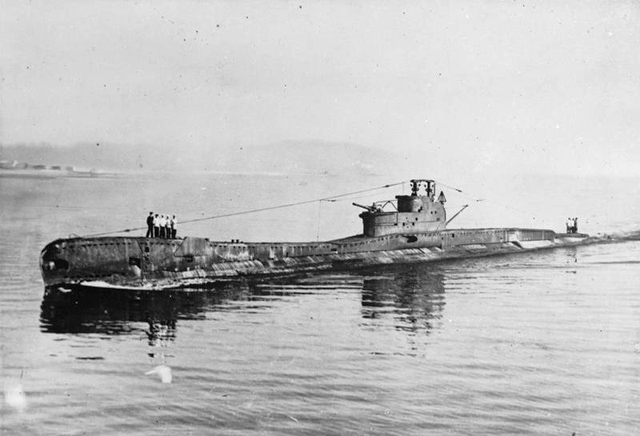
To give you an idea of what the wreck may look like, this picture shows a WW2 U-boat which was sunk in 1945.None of its crew drowned, so there were no bodies aboard. © Historic Warships Birkenhead
It was recovered from the seabed in 1993 then carefully restored.
If you'd like to find out more about submarines, the Royal Navy Submarine Museum is the place to go. The Imperial War Museum's website has some amazing photos of submarines for you to check out. If you want to learn more about war, have you seen Show Me's Topic Guide to the First World War?
-